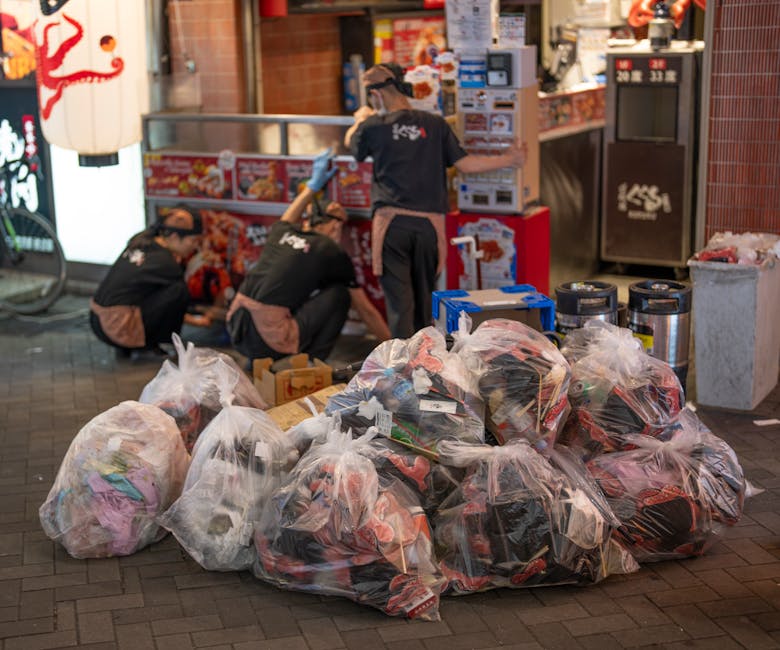
Top rated commercial rubbish clearance for Richmond shops
Shop waste has a funny way of building up when you are busiest. One delivery arrives early, a refit leaves packaging everywhere, the storeroom fills with broken displays, and suddenly the back room feels smaller than the shop floor. If you are looking for top rated commercial rubbish clearance for Richmond shops, you probably want something simple: a fast, tidy, compliant service that keeps your business moving and does not create extra stress.
This guide walks through what commercial rubbish clearance actually involves, how it works in practice, what makes a service worth trusting, and how Richmond shop owners can choose the right approach for retail waste, bulky items, and one-off clearances. We will also cover common mistakes, compliance basics, and a practical checklist you can use before booking anything.
Table of Contents
- Why Top rated commercial rubbish clearance for Richmond shops Matters
- How Top rated commercial rubbish clearance for Richmond shops Works
- Key Benefits and Practical Advantages
- Who This Is For and When It Makes Sense
- Step-by-Step Guidance
- Expert Tips for Better Results
- Common Mistakes to Avoid
- Tools, Resources and Recommendations
- Law, Compliance, Standards, or Best Practice
- Options, Methods, or Comparison Table
- Case Study or Real-World Example
- Practical Checklist
- Conclusion
- Frequently Asked Questions
Why Top rated commercial rubbish clearance for Richmond shops Matters
For a shop, waste is not just waste. It affects presentation, safety, stock handling, customer experience, and even how calmly your team can work. A pile of cardboard by the rear entrance, a stack of damaged shelving near the till, or old point-of-sale units in a corridor can get in the way fast. And let's face it, a cluttered back-of-house area tends to create a cluttered day.
Richmond shops often operate in tight spaces with limited storage, shared access routes, or delivery windows that are already squeezed. That means commercial rubbish clearance has to be more than a van turning up and taking things away. It needs to be planned around your opening hours, your neighbours, and your practical reality. No drama. No lingering mess. Ideally, just a smooth handover from clutter to clear space.
There is also the trust side of it. Commercial waste has to be handled properly, especially if it includes mixed materials, electrical items, packaging, or anything that needs separating before disposal. Choosing a provider with a professional, business-focused approach helps reduce the risk of fly-tipping, missed collections, or the awkward moment where your stockroom looks worse after the job than before it.
If your business regularly generates waste, it is worth thinking beyond one-off removals. A shop that clears waste consistently tends to operate more efficiently, keep staff happier, and avoid those last-minute scrambles before an inspection, refit, or seasonal reset. In our experience, that kind of calm is worth a lot.
How Top rated commercial rubbish clearance for Richmond shops Works
Commercial rubbish clearance is usually straightforward, but the best results come from a clear process. For Richmond shops, the service normally starts with a quick assessment of what needs removing, how much access there is, and whether the waste is mixed or bulky. A good provider will ask useful questions rather than just quoting blindly. That saves everyone time.
Here is the basic shape of it:
- Initial enquiry - you describe the waste, the location, and timing constraints.
- Quote or estimate - the provider factors in volume, labour, access, and disposal type.
- Collection planning - you agree a time that fits around opening hours or quiet periods.
- Removal - the team loads the waste, usually from the back area, storeroom, or front-of-house after closing.
- Sorting and disposal - reusable, recyclable, and general waste are handled appropriately where possible.
- Site left tidy - the goal is to leave the area clear, not simply empty the pile and vanish.
Some clearances are tiny. A handful of broken fixtures, a few bags of packaging, maybe a dead fridge from the break room. Others are more involved, like a full seasonal clean-out, a post-refit clearance, or a stockroom purge after a layout change. The process stays similar, but the level of planning changes.
If your waste overlaps with other clearance needs, it can help to look at broader services too, such as business waste removal for regular trade waste, or general waste removal for mixed household-style and commercial items that need proper handling.
Key Benefits and Practical Advantages
The obvious benefit is getting rid of rubbish. Fair enough. But the real value goes much further for retail businesses.
- More usable space - back rooms, stock areas, and customer-facing spaces become easier to work in.
- Better presentation - a tidy shop looks more professional and less rushed.
- Improved safety - fewer trip hazards, blocked walkways, and stacked items that might fall.
- Less staff disruption - your team can focus on customers instead of moving rubbish around all day.
- Faster turnover - especially useful after refurbishment, deliveries, or stock changes.
- Reduced stress - one less operational headache, which honestly matters more than people admit.
There is also a subtle customer-facing benefit. Even if most waste is hidden from the public, people notice when a business feels organised. They notice clean entrances, tidy rear access, and uncluttered shop windows. It builds confidence. A neat environment says the business is on top of things.
For shops dealing with old shelving, damaged fixtures, or worn furniture, you may also find the linked specialist pages useful, especially furniture clearance and furniture disposal if the job includes counters, seating, display units, or storage pieces.
Who This Is For and When It Makes Sense
This service makes sense for a wide range of Richmond retail businesses. Think independent boutiques, convenience stores, cafes with takeaway waste, salons, pharmacies, small markets, gift shops, hardware shops, and pop-up units. Even if you are not generating huge volumes every day, the occasional bulky clearance can still be a nuisance.
You will usually need commercial rubbish clearance when:
- you are clearing out after a refit or rebrand
- old display stock or fixtures need removing
- packaging waste has built up after deliveries
- you are closing, relocating, or downsizing
- a stockroom, basement, or storage area has become unworkable
- broken or obsolete equipment needs lawful disposal
- you need a fast one-off clearance before a busy trading period
It is also relevant for landlords and managing agents who oversee shop units between tenancies. Empty commercial spaces can accumulate left-behind items fast. If that happens, the job is often less like simple waste collection and more like a small clearance project.
And if the shop includes office space upstairs or in the back, an office clearance can be a useful companion service. Same for larger furniture moves, which may fit better under furniture clearance depending on what is being removed.
Step-by-Step Guidance
Here is a practical way to prepare for a commercial rubbish clearance in a Richmond shop. Nothing fancy. Just the sort of process that keeps things moving.
1. Separate what is staying from what is going
Before anyone arrives, tag items that must remain on site. This sounds obvious, yet it saves the most trouble. A stray display stand or a box of active stock can disappear into the wrong pile if the space is chaotic.
2. Identify bulky, fragile, or awkward items
Old shelving, counter units, mirrors, broken glass, or awkwardly shaped materials need to be flagged early. These items affect lifting, timing, and whether extra equipment is required. If there is anything heavy or sharp, mention it plainly.
3. Check access and timing
Can a van park close to the entrance? Is there rear access? Do you need the work done before opening, after closing, or during a quiet period? Small access details change everything in a busy street. In Richmond, that can be the difference between a smooth job and a frustrating one.
4. Ask how the waste will be handled
Not every item should be treated the same way. Cardboard, metal, wood, electrical items, and mixed rubbish may need sorting. A responsible provider should be able to explain the basics in plain English.
5. Confirm what the quote includes
Find out whether labour, loading, disposal, and tidying are included. It is better to be precise up front than to have a mild surprise later. Nobody enjoys that conversation at the end of a long shop day.
6. Keep the site ready on the day
Move loose stock out of the way, unlock access points, and make sure staff know what is being removed. The quicker the handover, the quicker the clearance. Simple as that.
7. Walk the space after removal
Take one slow look around afterwards. Check corners, under counters, and behind doors. Little leftovers have a habit of hiding in plain sight, especially in older retail units.
Expert Tips for Better Results
There are a few things that consistently improve the outcome, and most of them are refreshingly low-tech.
- Book before the mess becomes urgent. Panic bookings usually cost you flexibility.
- Group waste by type if you can. Cardboard, timber, fixtures, and general rubbish are easier to manage when separated.
- Photograph the load in advance. Not for drama. Just to make quoting more accurate.
- Plan around quieter hours. Early mornings or evenings often reduce disruption.
- Flag anything sensitive. Data-bearing items, branded materials, or stock you need handled carefully should never be left to guesswork.
One useful habit is to build a small "clearance corner" in the shop or stockroom. Not huge. Just a defined space where unwanted items can be gathered safely until collection day. It sounds basic, but it stops waste from spreading everywhere. You will notice the difference within a week.
If your business is in the middle of a wider refresh, services such as builders waste clearance can be relevant too, especially when your shop refit leaves behind plasterboard, timber, packaging, or mixed construction debris.
Common Mistakes to Avoid
Most clearance problems are preventable. Usually, they come down to rushed planning, vague descriptions, or underestimating how much there is to remove.
- Assuming all waste is the same. It is not. Mixed waste, bulky waste, and electrical items are handled differently.
- Booking without checking access. A clearance team cannot magic a van into a narrow street if parking is impossible.
- Forgetting back-of-house areas. Stockrooms and basements are often where the real volume hides.
- Not confirming responsibilities. Know who is moving what, and who is making the final sign-off.
- Leaving it until the last minute. The "we'll sort it tomorrow" approach has a habit of turning into a bigger problem.
Another one: treating the cheapest option as the best one. On paper, bargain pricing is attractive. In reality, poor communication or sloppy handling can cost more in time, disruption, and clean-up. Cheap is only cheap if the job is actually done properly.
Tools, Resources and Recommendations
You do not need a complicated toolkit, but a few practical items make shop clearances easier.
- Label stickers or tape for marking keep, remove, and review items
- Basic gloves for staff sorting light items safely
- A smartphone camera to document the waste before collection
- Rollers or trolleys for moving awkward boxes or smaller fixtures
- Storage crates for separating recyclable materials from general rubbish
From a service perspective, the most useful pages to explore on the site are pricing and quotes if you want to understand how jobs are estimated, and recycling and sustainability if you want to see how recyclable material is handled more responsibly.
For business confidence and service trust, it also helps to review the company's public policies, including health and safety policy, insurance and safety, and payment and security. Those pages tell you a lot about how professionally a provider works, even before you speak to them.
Law, Compliance, Standards, or Best Practice
Commercial rubbish clearance in the UK sits inside a wider duty of care mindset. In plain language, that means businesses should take reasonable steps to make sure waste is stored, transferred, and disposed of responsibly. You do not need to become a compliance expert, but you do need to avoid casual disposal practices.
For Richmond shop owners, that usually translates into a few sensible standards:
- use a provider that understands commercial waste handling
- keep records of what was removed, where appropriate
- separate obvious recyclables where practical
- do not leave waste on pavements, in service areas, or in a way that creates obstruction
- ask questions if you are unsure how electricals, fixtures, or mixed material should be handled
Good practice also includes respecting staff safety and the public realm. Shops near busy footfall areas need tidy collection windows, careful loading, and minimal mess. There is a common-sense element to all of this, really. If the removal process feels rushed or unclear, that is usually a sign to pause and ask more questions.
For businesses with a broader service footprint, it can help to check the provider's wider approach too, including their modern slavery statement, complaints procedure, and about us page. These are not flashy details, but they do signal how a company thinks about accountability.
Options, Methods, or Comparison Table
There is no single right way to deal with shop waste. The best method depends on volume, urgency, and the type of material involved. Here is a simple comparison to help you decide.
| Option | Best for | Pros | Watch out for |
|---|---|---|---|
| One-off commercial rubbish clearance | Refits, stockroom clear-outs, bulky waste | Fast, flexible, minimal disruption | Needs clear scope to avoid confusion |
| Regular business waste removal | Ongoing trade waste, repeat collections | Predictable, routine, easier to manage | Less suited to sudden bulky jobs |
| Mixed waste clearance | General clutter, packaging, fixtures | Convenient when items are varied | May need better sorting and labour planning |
| Specialist item removal | Furniture, old fittings, specific bulky items | Better handling for awkward pieces | May need to be paired with another service |
For many Richmond shops, the smart move is a mix: regular business waste handling for the day-to-day, plus occasional one-off clearance for the larger jobs. That keeps the shop light on its feet, which is exactly what a busy retail space needs.
Case Study or Real-World Example
Picture a small independent shop in Richmond that is preparing for a seasonal refresh. The owner has new displays arriving next week, but the back room is already packed with broken shelving, old promotional boards, flattened boxes, and a few pieces of worn furniture. The shop is still trading, so there is no room for a full shutdown. Time is tight.
Instead of trying to tackle everything in-house over several exhausted evenings, they arrange a commercial rubbish clearance after closing. First, they separate stock from waste and mark anything staying on site. They also flag a couple of awkward items, including a damaged counter and a heavy fixture near the rear corridor. The collection team turns up at the agreed time, works through the load methodically, and clears the area without interrupting the next day's trading.
The practical difference is immediate. Staff can move safely. The incoming displays have somewhere to go. The owner is not tripping over old packaging at 8:30 in the morning. Small win? Maybe. But in retail, small wins add up fast.
That sort of job is a good fit for broader support services too, especially if the clearance includes offcuts or mixed renovation debris. A well-planned approach saves the sort of Friday-afternoon panic nobody needs.
Practical Checklist
Use this checklist before booking shop waste clearance.
- Have I listed everything that needs removing?
- Have I separated stock, equipment, and rubbish clearly?
- Do I know which items are bulky, fragile, or heavy?
- Is access to the shop, stockroom, or rear area clear?
- Have I chosen a time that reduces disruption to trading?
- Do I understand what is included in the quote?
- Have I asked how recyclable items are handled?
- Do staff know what is being collected?
- Have I checked for anything left in corners, under counters, or behind displays?
- Is there a tidy final walkthrough planned after removal?
If you can tick most of those off, you are already ahead of the game. Truth be told, a bit of structure goes a very long way here.
Get a free quote today and see how much you can save.
Conclusion
The best commercial rubbish clearance for Richmond shops is not just about removing waste. It is about keeping your business efficient, safe, and ready for customers. Whether you are clearing packaging, old fittings, broken furniture, or the aftermath of a refit, the right service should be quick to organise, careful on site, and clear about how everything is handled.
What matters most is fit: fit for your space, fit for your timetable, and fit for the way your shop actually works. If you choose well, the result is simple. Less clutter. Less stress. More room to trade properly.
And on a busy Richmond high street, that calm, tidy finish can make all the difference. One clear space at a time.
Frequently Asked Questions
What counts as commercial rubbish in a shop?
Commercial rubbish can include packaging, damaged stock, broken shelving, old counters, display units, general clutter, and other waste produced through business activity. The exact mix varies by shop type.
Is commercial rubbish clearance different from regular business waste removal?
Yes. Regular business waste removal is usually ongoing and routine, while commercial rubbish clearance is often a one-off or occasional service for larger, bulkier, or more mixed loads.
Can a clearance be done outside trading hours?
Usually, yes. Many shop owners prefer early mornings, evenings, or closed periods so the work does not interfere with customers. It is often the easiest way to keep disruption down.
What should I do before the team arrives?
Separate items that are staying, gather the waste in one place if possible, clear access routes, and flag any heavy or awkward items. A little prep makes the job much smoother.
Do I need to sort recyclables myself?
Not always, but separating obvious recyclables like cardboard or metal can help. If you are unsure, ask how the waste will be sorted and handled. Good providers should explain this clearly.
What if my shop has very limited access?
That is common in tighter commercial spaces. Just be upfront about stairs, narrow corridors, parking restrictions, or rear access issues. The quote and the plan should reflect that reality.
Can old shop furniture be removed too?
Yes, in many cases. Display units, counters, chairs, and similar items can often be removed as part of a clearance or under a furniture-focused service, depending on what needs taking away.
How do I know if a provider is professional?
Look for clear communication, transparent pricing, sensible questions about access and volume, and helpful information about safety, recycling, and payment. The overall tone tells you a lot, honestly.
What happens if the waste is mixed and awkward?
That is normal enough. Mixed loads just need more careful planning. Let the provider know exactly what is there, including anything heavy, fragile, or potentially awkward to lift.
Can this service help before a shop refit or closure?
Absolutely. A clearance is often most useful before a refit, move, or closure because it opens up the space for contractors, new stock, or a final handover.
How often should a shop arrange clearance?
There is no single rule. Some shops only need occasional one-off clearances, while others benefit from regular waste handling plus periodic bulk removal. It depends on trading volume and storage pressure.
Where can I learn more about pricing and safety?
The most relevant pages are the site's pricing and quotes, health and safety policy, and recycling and sustainability pages. They give a clearer picture of how the service is set up and what standards guide the work.